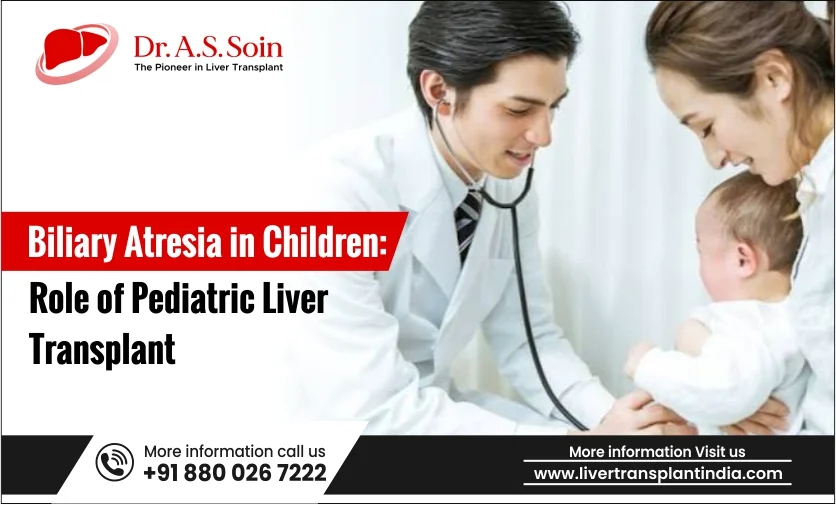
Biliary atresia is a rare but serious liver disease that affects newborn babies and can lead to progressive liver damage if not treated at the right time. Early diagnosis, timely medical intervention, and expert surgical care play a crucial role in improving outcomes for children suffering from this condition. In advanced cases where liver function continues to decline, pediatric liver transplant becomes a life-saving treatment option.
At Liver Transplant India, children with complex liver conditions are treated with advanced transplant techniques under the guidance of experienced specialists. Dr. A.S. Soin, one of the most experienced liver transplant surgeons in Delhi, provides comprehensive evaluation and advanced treatment solutions for children requiring liver transplantation. With expertise in pediatric liver transplant procedures, Liver Transplant India focuses on providing personalized care, advanced surgical expertise, and long-term support for young patients and their families.
What is Biliary Atresia in Children?
Biliary atresia is a congenital liver disorder in which the bile ducts, which normally carry bile from the liver to the intestine, become blocked or damaged shortly after birth. Due to this blockage, bile cannot flow properly, causing bile accumulation inside the liver. Over time, this can result in inflammation, scarring of the liver (cirrhosis), and progressive liver failure. Bile is essential for digestion and removing waste products from the body. When bile flow is interrupted, children may develop symptoms such as yellowing of the skin and eyes (jaundice), dark urine, pale stools, poor weight gain, and abdominal swelling. Without appropriate treatment, biliary atresia can severely damage the liver, and many children eventually require a pediatric liver transplant to restore normal liver function and improve their quality of life.When Does Biliary Atresia Usually Develop?
Biliary atresia is usually identified within the first few weeks after birth. Most babies appear healthy at birth, but symptoms begin to appear between two and eight weeks of age. Parents should seek medical attention if a newborn develops:- Persistent jaundice after two weeks of birth
- Pale or clay-colored stools
- Dark yellow urine
- Poor feeding or slow growth
- Enlarged abdomen
- Excessive tiredness or irritability
Why is Pediatric Liver Transplant Required for Biliary Atresia?
The initial treatment approach for biliary atresia is usually a surgical procedure called the Kasai portoenterostomy. This surgery aims to restore bile drainage by connecting the intestine directly to the liver area. However, even after successful Kasai surgery, some children may continue to experience progressive liver damage. As the disease advances, scar tissue develops in the liver, leading to complications such as:- Liver cirrhosis
- Portal hypertension
- Fluid accumulation in the abdomen (ascites)
- Poor growth and nutrition problems
- Liver failure
Where Can Children Get Advanced Treatment for Biliary Atresia?
Choosing the right medical team is one of the most important decisions for families dealing with biliary atresia. Pediatric liver transplantation requires specialized expertise, advanced infrastructure, and experience in managing children before, during, and after transplant surgery. At Liver Transplant India, children receive comprehensive care including:- Detailed diagnosis and disease evaluation
- Assessment for transplant eligibility
- Pediatric transplant planning
- Advanced surgical expertise
- Post-transplant monitoring and lifelong follow-up
How is Liver Transplant Performed in Children with Biliary Atresia?
A pediatric liver transplant involves replacing the diseased liver with a healthy liver from a suitable donor. Depending on the child’s condition and availability of organs, different transplant approaches may be considered.Living Donor Liver Transplant
In many pediatric cases, a portion of the liver from a healthy family member can be donated for transplantation. The liver has the unique ability to regenerate, allowing both the donor and child to recover successfully.Deceased Donor Liver Transplant
In this procedure, the child receives a liver from a deceased donor who is medically suitable for transplantation. Before transplant surgery, the medical team performs detailed assessments, including:- Liver function evaluation
- Blood tests
- Imaging studies
- Nutritional assessment
- Infection screening
- Overall health evaluation
Signs That a Child May Need Liver Transplant Evaluation
Parents of children with biliary atresia should discuss transplant evaluation with specialists if their child develops:- Worsening liver function tests
- Increasing jaundice
- Growth failure despite nutritional support
- Recurrent infections
- Severe itching
- Enlarged spleen
- Bleeding problems
- Signs of liver failure
Benefits of Pediatric Liver Transplant for Children with Biliary Atresia
A successful liver transplant can significantly improve a child’s health and development. The major benefits include:- Restoration of normal liver function
- Improved growth and nutrition
- Better energy levels
- Reduced complications related to liver failure
- Improved long-term survival
- Opportunity for a healthier childhood
Why Choose Liver Transplant India for Pediatric Liver Transplant?
Managing biliary atresia requires experience, precision, and a multidisciplinary approach. Liver Transplant India offers specialized care for children requiring advanced liver treatment. Key reasons to choose Liver Transplant India include:- Expertise of Dr. A.S. Soin, a renowned liver transplant surgeon in Delhi
- Advanced liver transplant facilities
- Comprehensive evaluation and treatment planning
- Experienced transplant care team
- Personalized care for pediatric patients
- Long-term follow-up support
Conclusion
Biliary atresia is a serious liver condition that requires early diagnosis and specialized treatment. While initial procedures may help some children, advanced liver damage may make pediatric liver transplant the most effective life-saving option. With expertise in complex liver surgeries and transplantation, Dr. A.S. Soin at Liver Transplant India provides advanced care for children suffering from biliary atresia and other liver disorders. Timely consultation with an experienced liver transplant surgeon in Delhi can help families explore the best treatment options and improve their child’s chances of a healthier future.Frequently Asked Questions (FAQs)
1. Can biliary atresia be cured without a liver transplant?
In some children, early treatment with Kasai surgery can improve bile flow and delay disease progression. However, many children may eventually develop liver damage and require a liver transplant for long-term survival.2. What is the best age for liver transplant in children with biliary atresia?
There is no fixed age for transplantation. The timing depends on the child’s liver function, symptoms, growth, and overall health condition. Early evaluation by a transplant specialist helps determine the appropriate time.3. Is pediatric liver transplant safe?
With advancements in transplant surgery and post-operative care, pediatric liver transplantation has become a highly successful treatment option. Outcomes are improved when performed by experienced transplant teams.4. Can a parent donate part of their liver to a child with biliary atresia?
Yes, living donor liver transplantation allows a healthy family member, often a parent, to donate a portion of their liver to the child after detailed medical evaluation.5. How long can a child live after a liver transplant?
Many children who undergo successful liver transplantation can live healthy lives for many years with proper medication, regular monitoring, and follow-up care.6. How do I know if my child needs a liver transplant consultation?
If your child has biliary atresia with worsening symptoms, poor growth, increasing liver damage, or complications related to liver failure, consulting an experienced liver transplant surgeon in Delhi can help identify the right treatment plan.Written and medically reviewed by Dr. A. S. Soin — published .