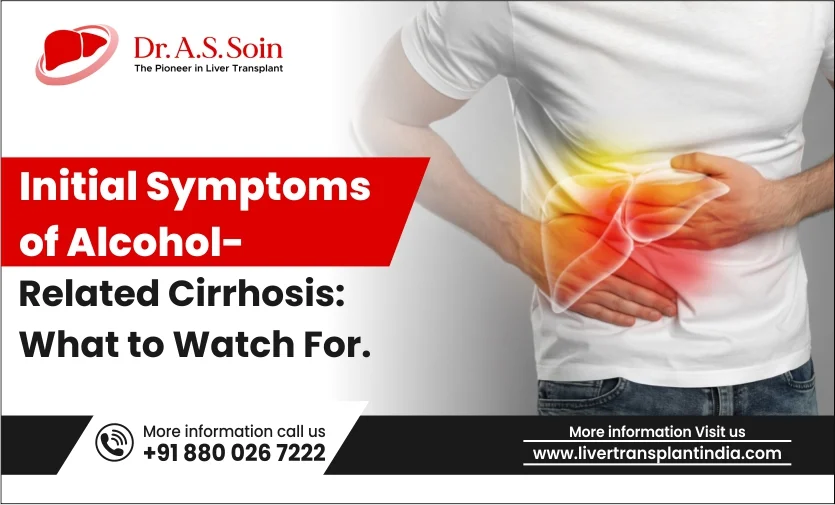
Alcohol-related cirrhosis is a serious liver condition often caused by prolonged alcohol consumption. The disease impacts liver function, leading to various symptoms that may start mildly and worsen over time. Early detection can improve outcomes significantly. When it comes to treating cirrhosis, Dr. A.S. Soin offers expert care to help patients manage symptoms and prevent further liver damage. Our team focuses on customised treatment options to support every step of your recovery journey.
This article highlights the initial symptoms of alcohol-related cirrhosis, what to look for, and available new treatment for cirrhosis.
What is Alcohol-Related Cirrhosis?
Alcohol-related cirrhosis is a late stage of liver disease that occurs after years of heavy drinking. Alcohol damages liver cells over time, leading to inflammation and scarring, known as fibrosis. If unchecked, this fibrosis progresses into cirrhosis, which severely limits the liver’s ability to function. In cirrhosis, healthy liver tissue is gradually replaced with scar tissue, impairing blood flow and the liver’s ability to perform critical tasks like detoxifying the body, producing bile, and processing nutrients. Eventually, alcohol-related cirrhosis can lead to liver failure. People diagnosed with alcohol-related cirrhosis face significant health risks, including fluid accumulation, jaundice, and an increased risk of infections. Early intervention, including lifestyle changes and cirrhosis treatment, can make a difference. Liver cirrhosis treatment options vary depending on the condition’s severity. While no single new treatment for cirrhosis can reverse the scarring, specific therapies can halt or slow its progression. In advanced cases, liver transplant for cirrhosis may become necessary.Signs and Symptoms that Indicate You Have Alcohol-Related Cirrhosis
Recognising early signs of alcohol-related cirrhosis helps in seeking timely treatment, potentially slowing progression and improving overall liver health. Here are all the signs and symptoms you need to watch out for:-
Fatigue and Weakness
-
Jaundice
-
Abdominal Pain and Swelling
-
Loss of Appetite and Weight Loss
-
Easy Bruising and Bleeding
-
Itchy Skin
-
Swelling in the Legs and Ankles (Edema)
-
Spider-Like Blood Vessels on the Skin
-
Confusion and Cognitive Impairment
-
Dark Urine and Pale Stool
-
Muscle Cramps and Weakness
-
Fever and Frequent Infections
-
Vomiting Blood or Blood in Stool
-
Nausea and Vomiting
-
Sensitivity to Medications
-
Dry Mouth and Excessive Thirst
-
Bad Breath (Fetor Hepaticus)
-
Hormonal Imbalance
-
Decreased Mental Sharpness
-
Hypoglycemia (Low Blood Sugar)
Medical Procedures to Mitigate the Symptoms of Alcohol-Related Cirrhosis
This section will cover medical procedures and treatments that help manage alcohol-related cirrhosis symptoms and improve patient quality of life.-
Medications to Slow Disease Progression
-
Endoscopic Procedures
-
Liver Transplantation
-
Paracentesis
-
Lifestyle Changes
Conclusion
Recognising alcohol-related cirrhosis early is crucial for effective treatment. Addressing symptoms quickly can protect your health and improve your quality of life. So, if you experience any of the above signs, consult Dr. A.S. Soin today! He is here to guide you toward the best treatment for liver cirrhosis, ensuring you receive the expert care you need.Written and medically reviewed by Dr. A. S. Soin — published .