Liver cirrhosis treatment in Delhi starts with one critical step—an accurate diagnosis. Before recommending the right treatment plan, specialists must understand the extent of liver damage, identify the underlying cause, and determine whether the liver can still function effectively. At Liver Transplant India, under the expert guidance of Dr. A.S. Soin, patients receive comprehensive evaluation using advanced diagnostic techniques, including FibroScan and liver biopsy, along with blood tests and imaging studies.
Early diagnosis of liver cirrhosis not only improves treatment outcomes but also helps prevent life-threatening complications such as liver failure, portal hypertension, and liver cancer. This guide explains how liver cirrhosis is diagnosed in India, when a FibroScan or liver biopsy is recommended, and which test is best for your condition.
Why Choose Liver Transplant India for Liver Cirrhosis Treatment in Delhi?
If you have persistent liver-related symptoms or have been diagnosed with chronic liver disease, choosing an experienced liver care center is essential. Liver Transplant India, led by Dr. A.S. Soin, offers advanced diagnostic facilities and personalized treatment plans for patients with liver cirrhosis and other complex liver disorders.
Our strengths include:
- Comprehensive liver health assessment under one roof
- Advanced FibroScan technology for non-invasive liver fibrosis evaluation
- Expert liver biopsy procedures when clinically required
- Highly experienced liver transplant and hepatology team
- Personalized treatment plans based on the stage of liver disease
- International standards of liver care with multidisciplinary support
- Advanced management of hepatitis, fatty liver disease, cirrhosis, and liver failure
Whether your condition can be managed with medication and lifestyle changes or requires advanced intervention, our team ensures you receive the most appropriate care at every stage.
What Is Liver Cirrhosis?
Liver cirrhosis is the advanced stage of chronic liver disease in which healthy liver tissue is gradually replaced by scar tissue (fibrosis). This scarring affects normal liver function and reduces the organ’s ability to process nutrients, filter toxins, produce proteins, and regulate blood clotting.
Cirrhosis usually develops over several years due to continuous liver injury caused by conditions such as:
- Chronic hepatitis B or hepatitis C
- Alcohol-related liver disease
- Non-alcoholic fatty liver disease (NAFLD) and NASH
- Autoimmune liver diseases
- Genetic or metabolic liver disorders
- Long-term bile duct diseases
Detecting cirrhosis before irreversible damage occurs is essential for improving long-term outcomes.
When Should You Get Tested for Liver Cirrhosis?
Your doctor may recommend evaluation if you have symptoms such as:
- Persistent fatigue
- Yellowing of the skin or eyes (jaundice)
- Swelling in the legs or abdomen
- Unexplained weight loss
- Loss of appetite
- Easy bruising or bleeding
- Itchy skin
- Dark urine
- Confusion or memory problems
- Long-standing fatty liver disease
- Chronic hepatitis infection
- Heavy alcohol consumption history
- Abnormal liver function test results
People with known liver disease should also undergo regular monitoring even if symptoms are mild or absent.
Why Is Accurate Diagnosis Important?
A precise diagnosis helps specialists:
- Confirm whether cirrhosis is present
- Determine the severity of liver scarring
- Identify the underlying cause
- Assess the risk of complications
- Decide whether medical treatment is sufficient or liver transplantation may eventually be needed
- Monitor disease progression over time
This is why specialists often use multiple diagnostic tools instead of relying on a single test.
Where Is Liver Cirrhosis Diagnosed?
Comprehensive diagnosis is usually performed at specialized liver centers with access to advanced hepatology services.
At Liver Transplant India, patients undergo a complete liver evaluation that may include:
- Detailed medical history
- Physical examination
- Blood investigations
- Ultrasound
- CT scan or MRI when indicated
- FibroScan
- Liver biopsy in selected cases
Each investigation provides different information about liver health, allowing specialists to create an accurate diagnosis and treatment plan.
How Is Liver Cirrhosis Diagnosed?
Doctors combine clinical evaluation with imaging and laboratory investigations to understand the condition completely.
1. Blood Tests
Blood tests are usually the first step in diagnosing liver disease. They help evaluate:
- Liver enzyme levels
- Bilirubin levels
- Albumin
- Blood clotting (INR)
- Platelet count
- Viral hepatitis markers
- Autoimmune liver disease markers
Although blood tests suggest liver damage, they cannot accurately measure the amount of liver scarring.
2. Ultrasound
Ultrasound is commonly used to examine the liver’s size, texture, blood flow, and surrounding organs. Doctors may identify:
- Irregular liver surface
- Enlarged spleen
- Fluid accumulation (ascites)
- Portal hypertension
- Liver masses
However, ultrasound alone cannot accurately determine the degree of fibrosis.
What Is FibroScan?
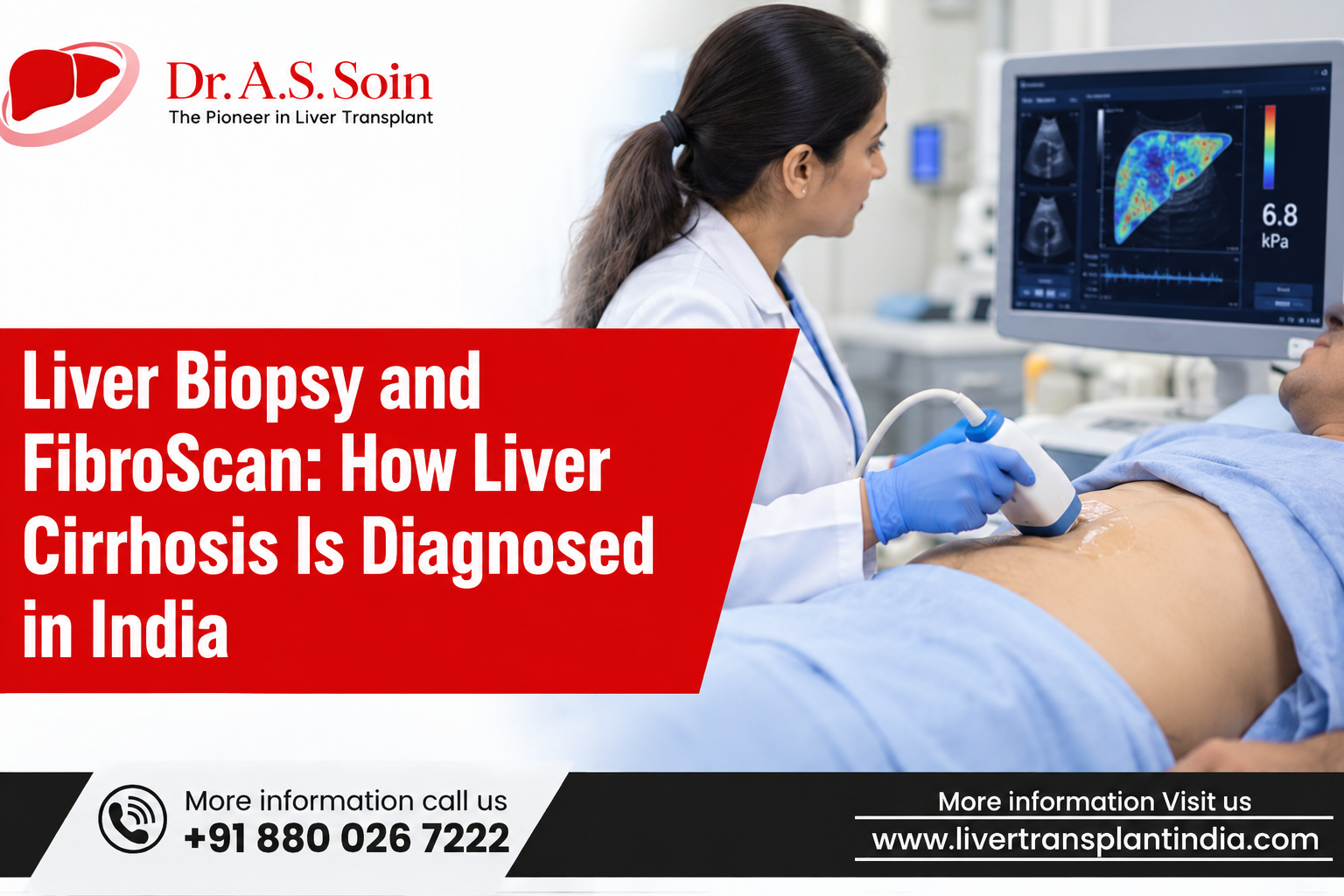
FibroScan is a modern, non-invasive diagnostic test that measures liver stiffness. Increased stiffness generally indicates more fibrosis or scarring within the liver.
Unlike liver biopsy, FibroScan does not involve needles, incisions, or anesthesia. The procedure is quick, painless, and usually completed within 10–15 minutes.
FibroScan works by:
- Sending painless vibration waves into the liver
- Measuring how quickly the waves travel through liver tissue
- Calculating liver stiffness using specialized software
Higher stiffness values generally suggest more advanced liver fibrosis.
When Is FibroScan Recommended?
Doctors commonly recommend FibroScan for patients with:
- Fatty liver disease
- Chronic hepatitis B
- Chronic hepatitis C
- Alcohol-related liver disease
- Elevated liver enzymes
- Suspected liver fibrosis
- Long-term liver disease monitoring
FibroScan is also useful for tracking treatment response without repeated invasive procedures.
Benefits of FibroScan
FibroScan has become one of the preferred diagnostic tools because it offers several advantages:
- Completely non-invasive
- No hospitalization
- No recovery period
- Quick procedure
- Immediate results
- Can be repeated safely
- Helps monitor disease progression over time
For many patients, FibroScan reduces the need for liver biopsy.
What Is a Liver Biopsy?
A liver biopsy involves removing a very small sample of liver tissue using a thin needle. The sample is then examined under a microscope by a pathologist.
Although it is more invasive than FibroScan, liver biopsy remains the gold standard in selected situations where additional microscopic information is required.
When Is a Liver Biopsy Needed?
Your liver specialist may recommend a biopsy if:
- Diagnosis remains uncertain
- FibroScan results are inconclusive
- Multiple liver diseases are suspected
- Autoimmune liver disease needs confirmation
- Rare liver disorders are suspected
- Cancer or abnormal liver lesions require evaluation
Not every patient with liver cirrhosis needs a biopsy.
Liver Biopsy vs FibroScan: Which Is Better?
| Feature | FibroScan | Liver Biopsy |
|---|---|---|
| Procedure | Non-invasive | Minimally invasive |
| Pain | Usually painless | Mild discomfort possible |
| Recovery | Immediate | Few hours of observation |
| Hospital Stay | No | Usually day-care |
| Measures | Liver stiffness | Actual liver tissue |
| Repeat Testing | Easy | Limited |
| Best For | Monitoring fibrosis | Complex diagnosis |
Rather than competing, these tests complement each other. Your hepatologist will decide which option is most appropriate based on your medical condition.
What Happens After Diagnosis?
Once liver cirrhosis is confirmed, treatment depends on:
- Cause of liver disease
- Stage of fibrosis
- Presence of complications
- Overall liver function
- Patient’s general health
Treatment may include:
- Medications
- Lifestyle modifications
- Alcohol cessation
- Weight management
- Antiviral therapy
- Regular monitoring
- Nutritional support
- Management of complications
- Liver transplantation in advanced cases
Early-stage cirrhosis can often be stabilized with timely intervention.
Why Early Diagnosis Makes a Difference
Many patients have liver cirrhosis for years without noticeable symptoms.
Identifying liver damage early allows doctors to:
- Slow disease progression
- Prevent liver failure
- Reduce hospitalization
- Improve quality of life
- Delay or avoid liver transplantation in suitable cases
Routine liver screening is especially important for individuals with chronic hepatitis, diabetes, obesity, fatty liver disease, or long-term alcohol use.
Expert Liver Cirrhosis Care at Liver Transplant India
If you are experiencing symptoms of chronic liver disease or have abnormal liver test results, don’t delay evaluation. At Liver Transplant India, Dr. A.S. Soin and his experienced liver care team provide advanced diagnostic services, including FibroScan, liver biopsy, and comprehensive liver function assessment.
With accurate diagnosis, personalized treatment planning, and access to advanced liver transplant expertise when needed, we help patients receive the right care at the right stage of their disease.
If you are searching for liver cirrhosis treatment in Delhi, our multidisciplinary team is committed to delivering world-class liver care focused on long-term health and improved quality of life. Arrange an appointment to get started.
Related Reads
Written and medically reviewed by Dr. A. S. Soin — published .