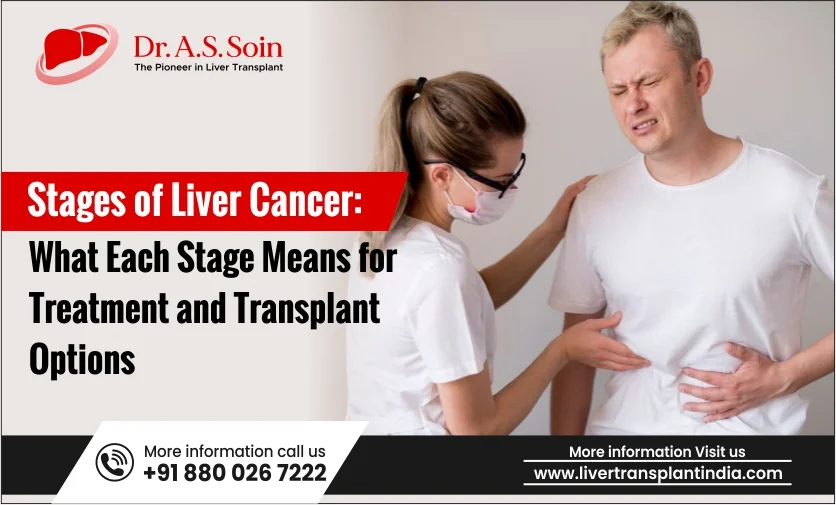
Liver cancer is a serious condition that requires timely diagnosis, expert evaluation, and a personalized treatment approach. With advancements in medical technology, liver cancer treatment in India now offers multiple options, including surgery, targeted therapies, immunotherapy, and liver transplantation for eligible patients. At Liver Transplant India, patients receive comprehensive cancer care under the expertise of renowned liver transplant surgeon Dr. A.S. Soin, who specializes in advanced liver disease management and complex liver transplant procedures.
Understanding the stage of liver cancer is one of the most important steps in deciding the right treatment plan. The stage helps doctors determine how much the cancer has grown, whether it has spread to other areas, and whether options like surgical removal or liver transplantation can provide long-term benefits.
Why Choose Liver Transplant India for Liver Cancer Treatment?
Liver cancer treatment requires a multidisciplinary approach involving liver transplant surgeons, oncologists, radiologists, and other specialists. At Liver Transplant India, patients receive advanced evaluation and treatment planning based on the type, size, location, and stage of liver cancer. Under the guidance of Dr. A.S. Soin, one of India’s leading liver transplant surgeons, patients are assessed for all possible treatment options, including:- Liver resection (removal of the cancerous portion of the liver)
- Liver transplantation for selected patients
- Ablation therapies
- Targeted cancer therapies
- Immunotherapy
- Supportive care for advanced-stage disease
What Are the Stages of Liver Cancer?
The stages of liver cancer describe how advanced the disease is. Doctors usually consider factors such as:- Size and number of tumors
- Location of tumors within the liver
- Whether cancer has affected blood vessels
- Whether cancer has spread to nearby lymph nodes or distant organs
- Overall liver function and patient health
Stage 0 Liver Cancer (Very Early Stage)
What Does Stage 0 Liver Cancer Mean?
Stage 0, also called very early-stage liver cancer, means there is usually a single small tumor in the liver, generally less than 2 cm in size. The cancer has not spread, and liver function is often well preserved.Treatment Options for Stage 0 Liver Cancer
At this stage, treatment aims to completely remove or destroy the cancer. Options may include:- Surgical removal of the tumor (liver resection)
- Local ablation procedures such as radiofrequency ablation (RFA)
- Microwave ablation
Stage I Liver Cancer (Early Stage)
What Happens in Stage I Liver Cancer?
Stage I liver cancer usually involves one tumor that has not invaded major blood vessels or spread outside the liver. Patients may have symptoms such as:- Unexplained weight loss
- Loss of appetite
- Fatigue
- Upper abdominal discomfort
Treatment Options for Stage I Liver Cancer
Depending on liver health and tumor location, treatment may include:- Liver surgery (resection)
- Ablation therapy
- Liver transplantation in selected cases
Stage II Liver Cancer (Intermediate Early Stage)
What Does Stage II Liver Cancer Mean?
Stage II liver cancer may involve:- Multiple small tumors within the liver, or
- A single tumor that has affected nearby blood vessels
Treatment Options for Stage II Liver Cancer
Treatment options may include:Liver Transplantation
For carefully selected patients with liver cancer and advanced liver disease, liver transplantation can be a curative option. It removes both the tumor and the diseased liver, reducing the risk of recurrence.Other Treatments
Doctors may also recommend:- Transarterial chemoembolization (TACE)
- Ablation procedures
- Targeted therapy
- Combination treatments
Stage III Liver Cancer (Locally Advanced Stage)
What Happens in Stage III Liver Cancer?
Stage III liver cancer indicates that the disease has become more advanced. It may involve:- Larger tumors
- Multiple tumors
- Involvement of major blood vessels
- Growth into nearby liver structures
Treatment Options for Stage III Liver Cancer
Treatment may include:- Targeted therapy
- Immunotherapy
- TACE or other liver-directed treatments
- Radiation therapy in selected cases
- Clinical trial-based therapies
Stage IV Liver Cancer (Advanced Stage)
What Does Stage IV Liver Cancer Mean?
Stage IV liver cancer is the most advanced stage. It means the cancer may have spread outside the liver to areas such as:- Lymph nodes
- Bones
- Lungs
- Other distant organs
Treatment Options for Stage IV Liver Cancer
Treatment may include:- Immunotherapy
- Targeted medicines
- Chemotherapy in selected cases
- Palliative care and symptom management
When Is Liver Transplant Considered for Liver Cancer?
Liver transplantation can be one of the most effective treatment options for selected liver cancer patients, especially when cancer is detected at an early stage and the liver has significant damage due to conditions like cirrhosis. A liver transplant may be considered when:- The tumor meets specific medical criteria
- Cancer has not spread outside the liver
- The patient’s overall health allows major surgery
- The expected benefit of transplantation is high
Why Early Diagnosis Matters in Liver Cancer Treatment
Early detection plays a major role in improving treatment outcomes. Liver cancer can often develop silently, especially in people with chronic liver conditions. Regular monitoring may be recommended for individuals with:- Liver cirrhosis
- Hepatitis B or Hepatitis C infection
- Non-alcoholic fatty liver disease (NAFLD)
- Long-term liver damage
Where Can Patients Get Advanced Liver Cancer Treatment in India?
Patients seeking advanced liver cancer treatment in India require access to experienced specialists, advanced technology, and a dedicated transplant team. Liver Transplant India, led by Dr. A.S. Soin provides comprehensive evaluation and treatment solutions for patients with liver cancer and complex liver diseases. The centre follows a patient-focused approach where treatment decisions are based on individual medical conditions rather than a one-size-fits-all approach.How Is the Right Liver Cancer Treatment Decided?
Doctors consider several factors before recommending treatment, including:- Stage of liver cancer
- Tumor size and number
- Liver function
- Patient age and overall health
- Presence of cirrhosis
- Previous treatments received
Get Expert Guidance for Liver Cancer Treatment in India
A liver cancer diagnosis can be overwhelming, but timely consultation with an experienced liver transplant specialist can help patients understand available treatment options. At Liver Transplant India, Dr. A.S. Soin and the dedicated medical team provide advanced evaluation and personalized treatment planning for patients requiring liver cancer care and transplantation. If you or your loved one needs expert guidance for liver cancer treatment in India, seeking consultation early can help explore the most suitable treatment options and improve the chances of better outcomes.Written and medically reviewed by Dr. A. S. Soin — published .
Frequently asked questions
Yes, liver cancer can be treated successfully, especially when diagnosed at an early stage. Treatments such as surgical removal, ablation, and liver transplantation may offer long-term disease control or cure in suitable patients.
Yes, liver transplantation can be an option for selected liver cancer patients. Eligibility depends on factors such as tumor size, number of tumors, cancer spread, and overall liver health.
The best treatment depends on the stage of cancer and the patient’s overall condition. Options may include surgery, ablation, targeted therapy, immunotherapy, or liver transplantation.
Survival after liver cancer treatment depends on several factors, including cancer stage, liver function, treatment type, and response to therapy. Early diagnosis and appropriate treatment can significantly improve outcomes.
No, liver transplantation is recommended only for selected patients who meet specific medical criteria. Some patients may benefit from surgery, ablation, or other therapies.
Common warning signs may include: Unexplained weight loss Loss of appetite Persistent fatigue Abdominal swelling or pain Yellowing of skin and eyes (jaundice) Nausea or vomiting However, some patients may have no symptoms in early stages, making regular screening important.