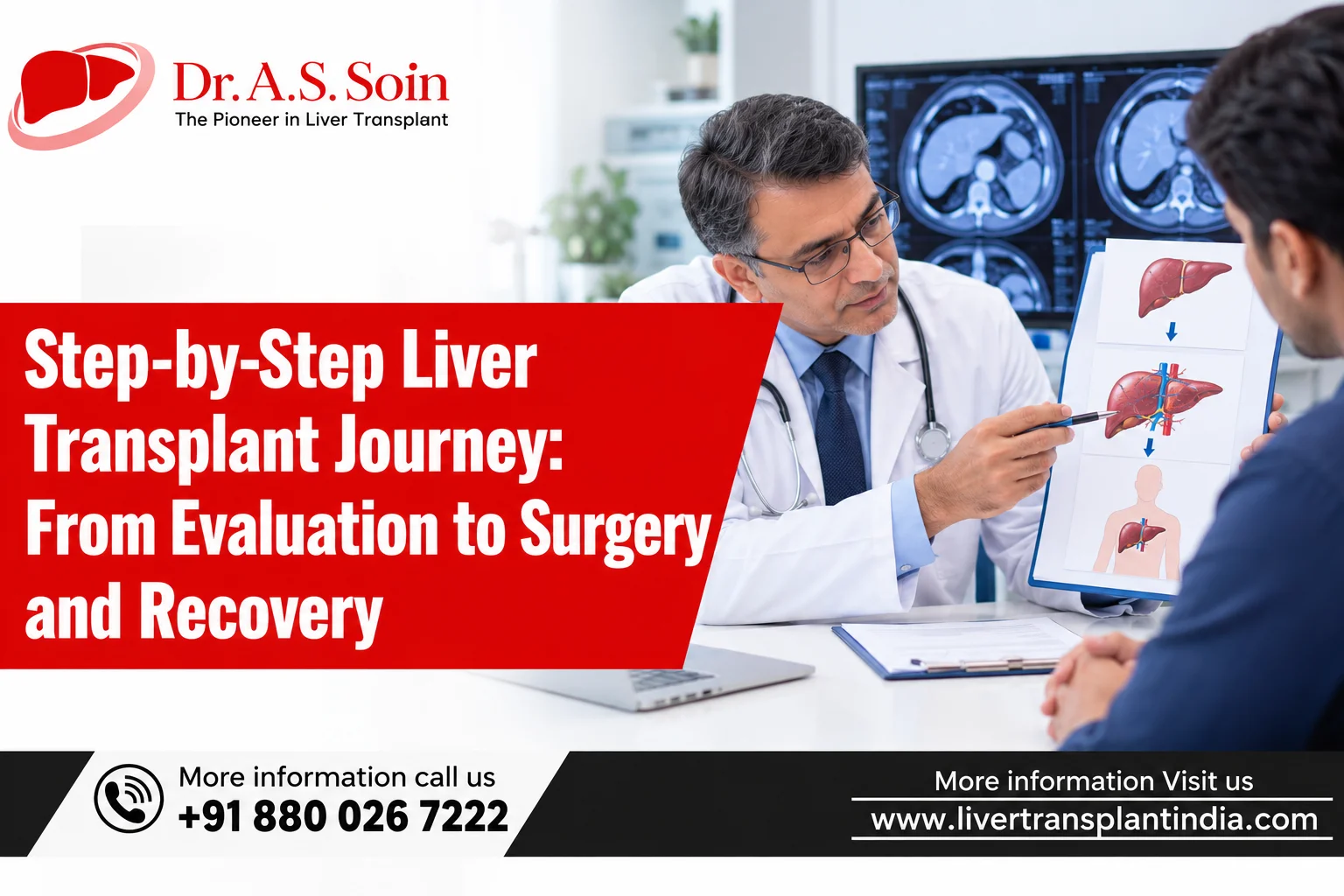
Facing a liver transplant can feel overwhelming, unfamiliar, and difficult to navigate. Knowing each step in advance makes it easier for patients and families to plan, ask the right questions, and stay calm. When you first meet a liver transplant doctor in India, you will be guided through the same main stages: tests, decisions about the donor, surgery, intensive care, and a structured recovery. This guide explains each step in simple terms, what to expect at each stage, and how long it usually takes.
Quick Answer: The 9 Steps of a Liver Transplant
A liver transplant involves several carefully planned stages, from initial evaluation and donor matching to surgery, recovery, and lifelong follow-up.
- Meet a liver transplant doctor and share your medical reports.
- Complete the recipient evaluation tests.
- The multidisciplinary team decides if a transplant is right and safe for you.
- Choose the donor type: living or deceased.
- Complete donor evaluation and legal approval under Indian transplant laws, if the donor is living.
- Wait and prepare through nutrition and physical prehabilitation.
- Undergo the surgery, which typically takes 8 to 12 hours.
- Recover in the dedicated liver ICU and then in the hospital ward.
- Go home, take lifelong anti-rejection medicines, and attend regular follow-up visits.
A good liver transplant doctor in India will explain each step before it happens. Timing differs from person to person. Acute liver failure may move through these steps in days, while a chronic illness may take weeks or months.
The Liver Transplant Journey at a Glance
The liver transplant journey moves through evaluation, donor planning, surgery, hospital recovery, and ongoing follow-up over several months.
| Stage | What Happens | Usual Time |
|---|---|---|
| First consultation | Doctor reviews reports and explains options | One visit |
| Evaluation | Blood tests, scans, heart and lung checks | 3 to 7 days (up to 2 weeks) |
| Decision | Team confirms if transplant is needed and safe | A few days |
| Donor planning | Living donor tests or waiting list registration | 1 to 3 weeks (or longer on a waiting list) |
| Surgery | Diseased liver removed, new liver placed | Typically 8 to 12 hours |
| ICU | Close monitoring of the new liver | About 3 to 7 days |
| Hospital ward | Walking, diet, and medicine training | Total stay about 2 to 3 weeks |
| Recovery at home | Check-ups, rest, and gradual return to routine | 3 to 6 months |
How Long Does the Whole Process Take?
The timeline varies from patient to patient. In acute liver failure, urgent testing and transplantation may be completed within 48 to 72 hours because the condition can deteriorate rapidly. For chronic liver disease, preparation may take weeks or months. A living donor transplant is faster to schedule than a deceased donor transplant because the date depends on donor clearance and legal approval rather than the state or national waiting list. On the deceased donor list, patients with the highest urgency scores and a matching blood group are prioritized.
Step 1: Meet a Liver Transplant Doctor in India
The journey starts with a consultation. The doctor asks about your illness, past treatments, medicines, and symptoms such as fluid buildup (ascites), jaundice, vomiting blood, or confusion (hepatic encephalopathy). Bring your previous records, including liver function tests, scans, endoscopy reports, and any biopsy results. If you have end-stage liver disease or select liver cancers, the doctor will explain whether a transplant will help and how soon it is needed.
Step 2: Evaluation Tests
The evaluation checks the severity of your liver disease and whether your body can safely handle major surgery. It usually takes 3 to 7 days as an outpatient or inpatient. Tests include:
- Blood tests: Checks for liver, kidney, and clotting function, blood group, and infections such as hepatitis B, hepatitis C, HIV, and CMV.
- Imaging scans: Ultrasound Doppler, triple-phase CT, or MRI to map the size and shape of the liver, its blood vessels, bile ducts, and any tumors.
- Heart and lung tests: ECG, echocardiogram, stress test (dobutamine stress echo or coronary angiography if needed), and pulmonary function tests.
- Endoscopy: Upper GI endoscopy to check for swollen veins (varices) in the food pipe or stomach that could bleed.
- Other checks: Dental clearance, nutritional and frailty assessment, age-appropriate cancer screening, and consultations with a psychiatrist or counselor.
Doctors also calculate your MELD-Na (or MELD 3.0) score for adults—or PELD score for young children—based on blood tests to measure how urgently you need a transplant.
Step 3: Deciding If a Transplant Is Right for You
After testing, the multidisciplinary transplant committee meets. A transplant is advised when the liver is failing or has early-stage liver cancer, and medical therapy is no longer enough. Certain medical conditions make transplantation unsafe, including severe untreatable heart or lung disease, active uncontrolled infections, cancer that has spread outside the liver, or active alcohol or substance abuse (though early transplant protocols now exist for select patients with severe alcohol-related hepatitis). Eligibility criteria vary between centers, so ask your team to explain their decision clearly.
Step 4: Choosing the Type of Donor
A liver transplant requires either a living or deceased donor. In India, living donor liver transplantation (LDLT) is the most common approach, where a healthy, medically suitable close relative donates a portion of their liver. Because the liver regenerates, both the donor’s remaining liver and the transplanted portion grow to normal capacity within a few weeks. With deceased donation (DDLT), the recipient receives a whole or split liver from a brain-dead donor via state and national networks (such as NOTTO or ROTTO). If a willing living donor has a different blood group, advanced centers offer paired kidney-liver/liver-liver swaps or ABO-incompatible (ABOi) transplants using specialized desensitization protocols.
Step 5: Donor Evaluation and Legal Approval
Donor safety is the top priority. A living donor undergoes a rigorous, independent medical and psychological evaluation to verify liver quality, volume, vascular anatomy, and overall fitness. In India, all living donations must comply with the Transplantation of Human Organs and Tissues Act (THOTA) and receive clearance from a hospital or state Authorization Committee. Near relatives (spouse, parents, siblings, children, grandparents, grandchildren) have a streamlined verification process, while other eligible donors require state committee review. A transplant coordinator assists with documentation, and the donor can confidentially withdraw consent at any stage.
Step 6: Waiting and Staying Strong
While waiting, focus on “prehabilitation”—keeping your body as strong as possible before surgery:
- Take all prescribed medicines on time and attend every clinic check-up.
- Follow a high-protein, low-salt diet as guided by your liver dietitian to prevent muscle loss and fluid buildup.
- Avoid alcohol and tobacco completely.
- Practice light exercises, walking, and breathing routines (incentive spirometry) if your doctor approves.
- Prevent infections by washing hands frequently and staying up to date on recommended vaccinations.
- Keep your phone reachable at all times if you are registered on the deceased donor waiting list.
Step 7: The Day of Surgery
Patients are admitted a day before or on the day of surgery and asked to fast for a set period. The transplant anesthetist reviews your current status, explains the anesthesia and monitoring plan, and completes final consents. During surgery, the diseased liver is removed, and the donor liver graft is placed. Surgeons perform delicate microsurgical connections of the hepatic veins, portal vein, hepatic artery, and bile duct to restore blood flow and bile drainage. The operation typically takes 8 to 12 hours. In a living-donor transplant, the donor’s surgery is performed simultaneously in an adjoining operating theatre, often using minimally invasive (laparoscopic or robotic) techniques in specialized centers.
Step 8: In the ICU and the Hospital Ward
After surgery, you move to a dedicated Liver Intensive Care Unit (ICU), where specialists monitor your breathing, heart rate, kidney function, and liver graft function via daily blood tests and ultrasound Doppler scans. Most patients are taken off the ventilator within 12 to 48 hours. The ICU stay typically lasts 3 to 7 days. Once shifted to the transplant ward, physical therapy begins—focusing on sitting up, walking, eating a fresh high-protein diet, and learning your medication schedule. The total hospital stay is usually 2 to 3 weeks for the recipient (and 5 to 7 days for a living donor).
Step 9: Going Home and Follow-Up
Before discharge, the team trains you and your caregivers on immunosuppressant (anti-rejection) medicines, blood sugar and blood pressure monitoring, wound care, and infection prevention. You must take anti-rejection medications daily for life—though doses are gradually reduced over time—to prevent your immune system from rejecting the new liver. Initially, you will need blood tests and clinic visits twice a week, spacing out to monthly and eventually every few months as you stabilize. Most centers offer tele-consultations for outstation patients. Read more about post-transplant care, medicines and follow-up.
Recovery Timeline: What to Expect
Recovery varies by individual, but most patients steadily regain strength through structured rehabilitation and follow-up.
| Time After Surgery | What You May Feel or Do |
|---|---|
| Weeks 1 to 3 | Hospital stay, pain control, assisted walking, spirometry, learning medicines |
| Weeks 3 to 8 | Recovery at home, daily indoor/short walks, frequent blood tests, no heavy lifting |
| Months 2 to 3 | Improved energy, surgical incision healed, light or work-from-home duties may begin |
| Months 3 to 6 | Return to desk work, driving, and normal daily routines with regular check-ups |
| 6 to 12 months | Full recovery for most patients; ongoing maintenance medicines and periodic visits |
These timelines are general estimates. Recovery speed depends on your pre-surgery muscle mass, nutritional status, age, and any post-operative complications. See what life after a liver transplant looks like day to day.
Special Notes for Children
Children follow the same core transplant steps, with extra focus on catch-up growth, specialized nutrition, immunization schedules, and neurodevelopment. A parent is commonly the living donor, donating a small left lateral segment of their liver (often performed laparoscopically or robotically). Families usually stay near the transplant center for the first 4 to 6 weeks post-discharge. With proper medical care, children achieve normal growth and return to school, sports, and active lives. Biliary atresia and metabolic liver diseases are the most common reasons for pediatric liver transplantation.
Warning Signs After a Liver Transplant
Contact your transplant coordinator or emergency team immediately if you notice:
- Fever, chills, or flu-like symptoms
- Yellowing of the skin or eyes (jaundice), dark urine, or pale stools
- New pain, redness, warmth, or fluid drainage around the abdominal incision
- Decreased urine output or sudden weight gain and leg swelling
- Persistent vomiting, diarrhea, or inability to keep anti-rejection medicines down
- Unusual drowsiness, confusion, tremors, or extreme fatigue
Prompt medical attention allows the team to quickly treat infections, acute rejection, or biliary and vascular issues. Learn more about managing complications after a liver transplant.
Life After a Liver Transplant
Over 85% to 90% of patients enjoy long-term survival and return to normal, productive lives. You will need to take medicines on time, avoid alcohol and unapproved painkillers or herbal supplements, eat freshly cooked hygienic food, and exercise regularly. Because immunosuppressants can increase the risk of diabetes, high blood pressure, bone thinning, and skin cancers, keep a healthy weight, use sunscreen outdoors, and attend annual health screenings. Speak with your doctor before taking any live vaccines. Connecting with support groups of transplant recipients and donors can also ease the transition.
How Families Can Support the Patient
Strong caregiver support improves transplant outcomes by helping with daily logistics, hygiene, and emotional resilience:
- Attend appointments and maintain a folder of all blood reports and prescriptions.
- Use a pillbox and set alarms to ensure immunosuppressant doses are never missed.
- Prepare fresh, well-cooked meals and maintain a clean, low-infection home environment.
- Watch closely for early warning signs and keep emergency hospital numbers handy.
- Plan ahead for treatment costs, insurance or crowdfunding paperwork, work leave, and local stay near the hospital.
- Support mental well-being, as mood swings or anxiety (sometimes triggered by steroid medicines or stress) are common and respond well to counseling.
How to Choose a Liver Transplant Doctor in India
When selecting a liver transplant doctor and center in India, look for:
- Accredited training in liver transplant surgery with extensive high-volume experience.
- Proven expertise in both living donor and deceased donor transplants, including complex cases (pediatric, ABO-incompatible, and minimally invasive donor surgery).
- A dedicated multidisciplinary team—hepatologists, transplant anesthetists, intensivists, interventional radiologists, and coordinators—backed by an infection-controlled Liver ICU.
- Transparent communication regarding survival rates, donor safety, and surgical risks.
- Structured long-term follow-up support, including telemedicine for out-of-town or international patients.
- A clear, itemized financial package detailing recipient, donor, and ICU inclusions.
Our detailed checklist of questions to ask before choosing a liver transplant surgeon and hospital covers exactly what to ask at each consultation.
Final Thoughts
A liver transplant is a major medical journey, but every stage has a clear, well-established purpose. Understanding the pathway helps you prepare, ask informed questions, and navigate the process with confidence. Consult an experienced liver transplant doctor in India early, organize your medical records, and take the process one step at a time. Never hesitate to ask your care team to clarify anything you do not understand—open communication is the foundation of successful care.
Why Choose Liver Transplant India?
Liver Transplant India is the official patient resource for the liver transplant program led by Dr. A. S. Soin, Chairman of the Institute of Liver Transplantation and Regenerative Medicine at Medanta – The Medicity, Gurugram (Delhi NCR). Having trained at AIIMS (New Delhi) and in the UK with FRCS degrees from Edinburgh and Glasgow, Dr. Soin was awarded the Padma Shri in 2010 for pioneering liver transplantation in India. With thousands of successful living donor, deceased donor, pediatric, swap, and ABO-incompatible liver transplants—including robotic donor surgeries—the team provides comprehensive, world-class care. If you are looking for a liver transplant doctor in India, you are welcome to connect with the medical team to discuss your case.
Related Reads
- Questions to Ask Before Choosing a Liver Transplant Surgeon
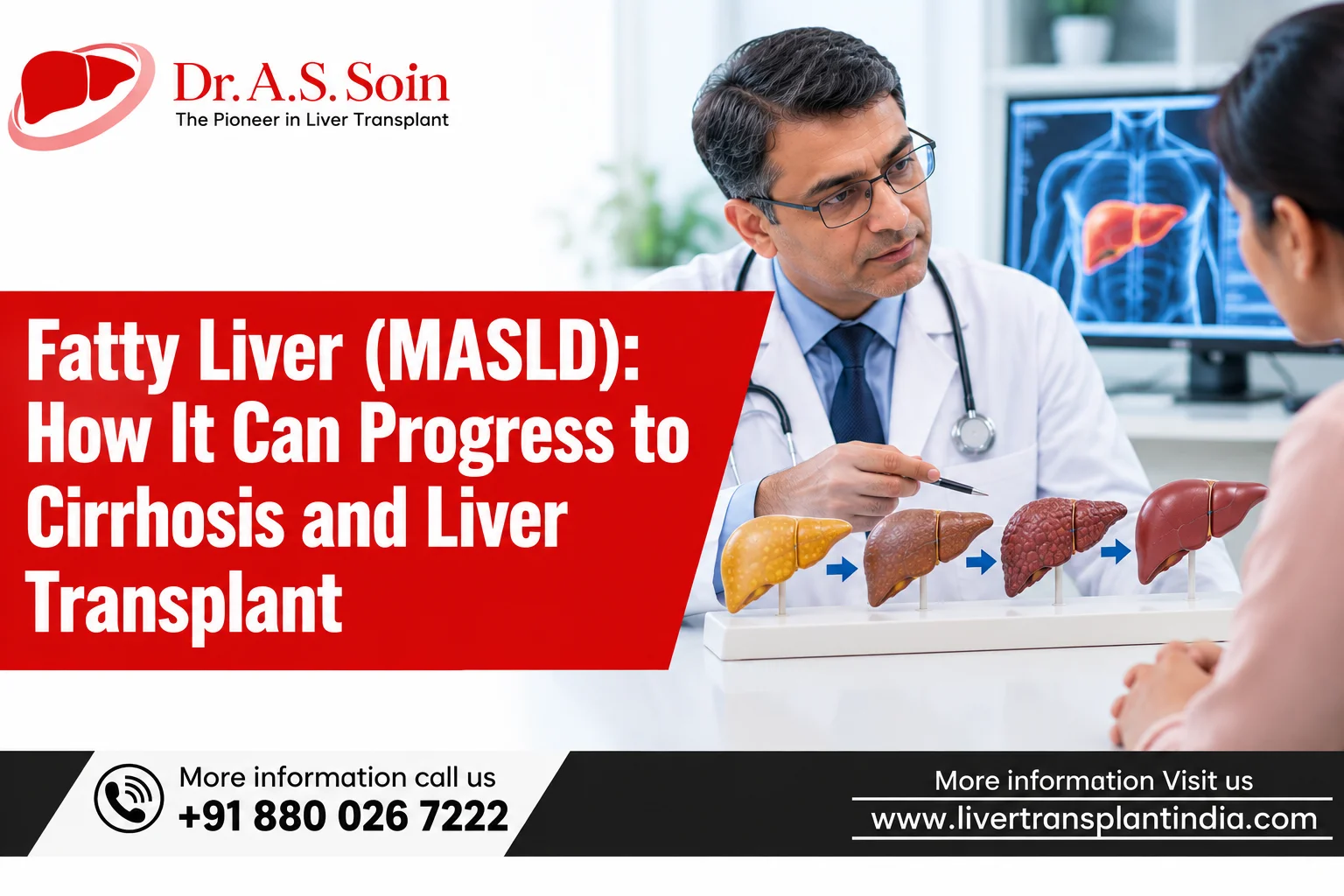
- Fatty Liver (MASLD): How It Progresses to Cirrhosis
- Living Donor vs Deceased Donor Liver Transplant
- Post Liver Transplant Care: Medicines and Follow-Up
- Life After a Liver Transplant: Recovery and Routine
- Liver Transplant in India: Why Does It Cost So Much?
Written and medically reviewed by Dr. A. S. Soin — published .