Fatty liver is one of the most common liver problems in India, and many people live with it for years without knowing. While it remains mild for most, persistent fat buildup can trigger liver damage, scarring, and eventually cirrhosis. In advanced stages, a liver transplant may be the only effective treatment, prompting many families to explore options for a liver transplant in Gurgaon and across Delhi NCR. This guide explains in simple words how fatty liver—now called MASLD—progresses, how to reverse or slow it down, and when a transplant is needed.
Quick Answer: Can Fatty Liver Lead to a Liver Transplant?
Yes, though only in a small percentage of people. Fatty liver (MASLD) means excess liver fat paired with metabolic issues like diabetes, high blood pressure, or overweight. In some individuals, this fat triggers inflammation and scarring (fibrosis). Over years, severe scarring becomes cirrhosis. A liver transplant is considered only when cirrhosis leads to liver failure or unmanageable complications. Early changes in diet, exercise, weight, and targeted medical therapy can stop or reverse this progression.
What Is MASLD?
MASLD stands for metabolic dysfunction-associated steatotic liver disease, the updated medical term replacing non-alcoholic fatty liver disease (NAFLD). A person is diagnosed with MASLD when fat builds up in the liver alongside at least one cardiometabolic risk factor—such as overweight/obesity, type 2 diabetes, high blood pressure, or abnormal cholesterol—without heavy alcohol use.
When excess fat triggers inflammation and cellular damage, it becomes MASH (metabolic dysfunction-associated steatohepatitis), formerly called NASH. MASH carries a higher risk of scarring. Recent Indian studies estimate that roughly 35% to 40% of adults in India have MASLD, making early awareness critical.
From Fatty Liver to Cirrhosis: The Stages
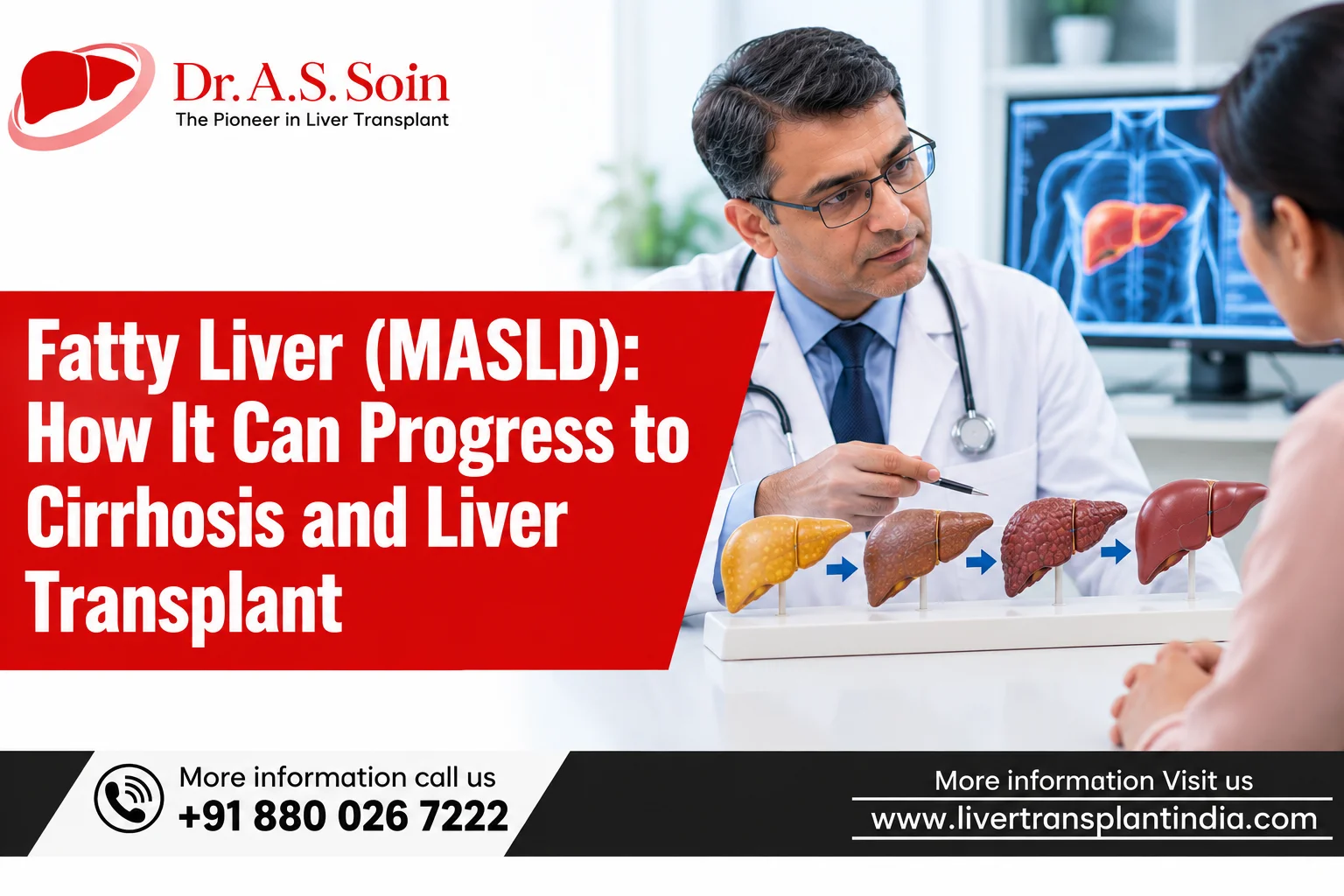
Fatty liver progresses gradually over years, though the course varies widely. Many individuals remain stable and never develop advanced scarring.
| Stage | What happens in the liver | Can it improve? |
|---|---|---|
| Simple fatty liver (Steatosis) | Fat builds up with little or no cell damage. | Yes, often completely with weight loss and lifestyle changes. |
| MASH | Fat triggers inflammation and damages liver cells. | Yes, if the underlying metabolic causes are treated. |
| Fibrosis | Scar tissue begins to form and spread. | It can slow, stop, and often regress with lifestyle changes and targeted therapy. |
| Cirrhosis | The scarred liver becomes stiff and functions poorly. | Advanced scars rarely disappear completely, but further damage can be halted. |
| Liver failure | The liver can no longer perform vital functions. | Usually requires liver transplant evaluation. |
How Fast Does Fatty Liver Progress?
Progression typically takes decades, but it accelerates in people with uncontrolled diabetes, visceral obesity, high blood pressure, or older age. Because some people develop scarring faster than others, regular check-ups are essential. Your doctor will schedule periodic blood tests, ultrasounds, or FibroScans based on your specific stage and risk profile.
Who Is at Risk & What Are the Symptoms?
Several health, lifestyle, and genetic factors raise the risk of MASLD:
- Being overweight or carrying excess belly fat (central obesity)
- Type 2 diabetes, prediabetes, or insulin resistance
- High blood pressure, high triglycerides, or abnormal cholesterol
- Sedentary habits and diets high in sugary drinks, refined carbs, and fried foods
- Obstructive sleep apnoea, hypothyroidism, or PCOS
- A family history of metabolic or chronic liver disease
In India, the “lean MASLD” phenotype is widespread—fatty liver frequently develops at a normal BMI (or a BMI over 23 kg/m² for Asians) due to abdominal fat and genetics. A normal weight does not guarantee a healthy liver.
Symptoms: Why Fatty Liver Is Called Silent
Early stages rarely cause symptoms, aside from occasional fatigue or a dull ache in the upper right abdomen. Warning signs typically appear only after significant liver damage develops:
- Yellowing of the eyes or skin (jaundice)
- Fluid buildup in the abdomen (ascites) or swelling in the legs
- Vomiting blood or passing black, tarry stools
- Confusion, daytime sleepiness, or personality changes
- Easy bruising or bleeding
- Unexplained weight loss and muscle wasting
If you notice any of these signs, consult a doctor immediately.
How Doctors Check How Far Fatty Liver Has Gone
Doctors combine tests to assess liver health. Blood tests check liver enzymes, blood sugar, lipids, and non-invasive fibrosis scores (such as FIB-4). An ultrasound detects fat buildup, while a FibroScan (transient elastography) measures liver stiffness to estimate scarring. A liver biopsy is reserved for cases needing deeper diagnostic clarity. Explore how liver biopsy and FibroScan for cirrhosis diagnosis help assess liver damage and guide treatment.
Can Fatty Liver Be Reversed?
In the early and moderate stages, yes. Lifestyle modification remains the cornerstone of treatment:
- Lose weight gradually: Losing 5% of body weight reduces liver fat; losing 7% to 10% can resolve MASH and reduce fibrosis.
- Improve your diet: Cut out sugary beverages, sweets, refined flour (maida), and fried foods. Focus on vegetables, whole fruits, pulses, and whole grains.
- Move more: Aim for at least 150 minutes of brisk aerobic activity weekly, plus resistance training twice a week.
- Control metabolic conditions & use targeted therapies: Keep diabetes, blood pressure, and cholesterol in check. Alongside statins (which are safe for fatty liver), doctors now utilize newer therapies—such as GLP-1 receptor agonists (like semaglutide), SGLT2 inhibitors, or targeted MASH medications like resmetirom—to reduce liver fat and scarring in eligible patients.
- Avoid alcohol completely: Alcohol accelerates liver scarring and should be strictly avoided.
Never stop prescribed medicines without consulting your doctor. For severe obesity, bariatric (weight-loss) surgery may also be discussed. Discover practical ways to prevent liver diseases and maintain better liver health.
Foods to Choose and Foods to Limit
Steady, sustainable adjustments work far better than crash diets. A clinical dietitian can tailor a plan to your preferences and budget. For a deeper look, see our guide to foods that help manage fatty liver.
| Choose more often | Limit or avoid |
|---|---|
| Non-starchy vegetables and whole fruits | Sugary drinks, packaged juices, and Indian sweets |
| Pulses, dals, sprouts, and lean proteins | Refined flour (maida) products and white bread |
| Whole grains like oats, millets, and brown rice | Deep-fried snacks, bakery items, and fast food |
| Nuts, seeds, and fatty fish in moderate amounts | Ultra-processed foods high in added sugar, salt, or trans fats |
| Water, buttermilk (chaas), and unsweetened black coffee or tea | Alcohol in all forms |
Cirrhosis Complications and When a Transplant Is Needed
What Complications Come With Cirrhosis?
When MASLD progresses to decompensated cirrhosis, the liver struggles to function, leading to:
- Fluid accumulation in the belly (ascites) and leg swelling
- Internal bleeding from enlarged veins in the food pipe (varices)
- Hepatic encephalopathy (confusion and drowsiness from toxin buildup)
- Kidney dysfunction, frequent infections, and severe muscle loss (sarcopenia)
- A higher risk of liver cancer (hepatocellular carcinoma), requiring six-monthly screening scans. Understand the stages of liver cancer and transplant options, including how each stage influences treatment decisions.
When Is a Liver Transplant Needed for Fatty Liver Disease?
Doctors recommend a transplant when cirrhosis causes irreversible complications or progressive liver failure. Urgency is measured using the MELD (including MELD 3.0) score, calculated from routine blood tests. Transplant evaluation typically begins when the MELD score reaches 15 or higher, or at the first sign of decompensation (ascites, bleeding, or confusion). It is also a curative option for select early-stage liver cancers within a cirrhotic liver. This page provides detailed information about end-stage liver disease and when liver transplantation becomes necessary. Seeing a transplant specialist early—before a medical emergency—gives families seeking a liver transplant in Gurgaon the best chance to plan safely.
Living With Cirrhosis While You Wait
If you are awaiting a transplant, protect your strength with these habits:
- Restrict dietary salt to control fluid buildup and swelling.
- Never skip meals; eat a protein-rich diet (including a late-evening snack) as guided by your dietitian to prevent muscle breakdown.
- Strictly avoid painkillers like ibuprofen, diclofenac, or aceclofenac (NSAIDs), which can trigger kidney failure.
- Avoid raw or undercooked food, especially shellfish and street food, to prevent severe infections.
- Take all prescribed medications on time and keep up with surveillance scans and endoscopies.
- Avoid all herbal, Ayurvedic, or over-the-counter supplements, as they can worsen liver failure.
Liver Transplant in Gurgaon: What to Expect
A liver transplant in Gurgaon follows rigorous, globally benchmarked protocols. It starts with a specialist consultation and comprehensive pre-transplant evaluation. Because MASLD is closely linked to diabetes, obesity, and cardiovascular disease, the team thoroughly evaluates heart, lung, and kidney function before surgery. Our step-by-step guide to the liver transplant journey walks through each stage in detail.
The team then advises on donor options: a living donor donates a portion of their healthy liver (which regenerates in both donor and recipient), while a deceased donor provides a whole or split liver. Post-surgery, patients typically spend a few days in a dedicated Liver ICU, followed by two to three weeks in the hospital, and take lifelong anti-rejection medications. The liver transplant program explains the complete range of services involved in transplantation.
Special Points for Patients With MASLD
- Heart health: Because MASLD and coronary artery disease go hand in hand, detailed cardiac clearance is essential before surgery.
- Weight and diabetes: Managing blood sugar and preserving muscle mass while controlling weight before and after surgery speeds recovery and protects the graft.
- Fatty liver can return: MASLD can recur in the transplanted liver if weight, diabetes, and diet are neglected, making lifelong healthy habits essential.
- Donor health: Living relatives wishing to donate are carefully screened for liver fat; mild fatty liver can often be reversed with a short supervised weight-loss program before donation.
How to Choose Where to Get a Liver Transplant in Gurgaon
Select a high-volume center with an experienced multidisciplinary team, strong outcomes in both living and deceased donor transplants, and dedicated liver ICU facilities. Ensure the team clearly explains surgical risks, provides a transparent written cost estimate, and offers structured long-term follow-up—especially if you are traveling from another city. Seeking a second opinion is always good practice. Our checklist of questions to ask before choosing a liver transplant surgeon can help during consultations.
Protecting Your Liver & Common Myths
How to Protect Your Liver Starting Today
- Screen for fatty liver if you have diabetes, central obesity, or high cholesterol—even if you feel healthy.
- Lose excess weight steadily and avoid extreme crash diets.
- Walk briskly and include strength exercises every week.
- Prioritize home-cooked meals and eliminate sugary beverages.
- Avoid alcohol completely.
- Ask your doctor about vaccinations for Hepatitis A and B.
- Keep up with scheduled FibroScans and blood tests if you already have fibrosis or cirrhosis.
Common Myths About Fatty Liver
- Myth: Only people who drink alcohol get fatty liver. MASLD develops in people who drink little or no alcohol, driven instead by metabolic factors.
- Myth: Thin people cannot get fatty liver. In India, “lean MASLD” is common among people with normal weight who have belly fat, diabetes, or genetic risk.
- Myth: Fatty liver is always harmless. While mild for many, it is a leading cause of cirrhosis, liver failure, and liver cancer worldwide.
- Myth: A pill alone can cure fatty liver. Even with newer approved medications, healthy eating, regular exercise, and weight management remain the foundation of recovery.
Final Thoughts
Fatty liver is common and highly reversible when caught early—the key is acting before advanced scarring sets in. If cirrhosis has already developed, timely transplant evaluation offers a vital second chance. Don’t wait for symptoms: simple blood tests and a FibroScan can clarify your liver health today. Speak with a liver specialist to understand your stage and build a clear roadmap, whether that involves lifestyle changes, medical therapy, or planning for a liver transplant in Gurgaon.
Why Choose Liver Transplant India?
Liver Transplant India offers access to a premier clinical program led by Dr. A. S. Soin, a globally renowned hepatobiliary and liver transplant surgeon in Gurgaon, Delhi NCR. Trained at AIIMS (New Delhi) and the University of Cambridge, Dr. Soin holds FRCS qualifications from Edinburgh, Glasgow, and in Transplant Surgery. He was awarded the Padma Shri in 2010 for pioneering liver transplantation in India. Having performed thousands of successful transplants, the program offers comprehensive living donor, deceased donor, pediatric, and ABO-incompatible liver transplants for families without a blood-group-matched donor. To discuss your case, contact the team online.
Related Reads
- Step-by-Step Liver Transplant Journey: Evaluation to Recovery
- Can a FibroScan Detect Cirrhosis? Tests Explained
- End-Stage Liver Disease: When a Transplant Is Needed
- Fatty Liver Diet: Foods That Help and Foods to Avoid
- Liver Cancer Treatment in India: Stages and Options
- Questions to Ask Before Choosing a Liver Transplant Surgeon
Written and medically reviewed by Dr. A. S. Soin — published .